
Arrowheads
by John Mooy
About this time of the year a fellow came into town (Marcellus) on his small Ford tractor with a plow attached to the back. He would drive up one street and down the next and for a nominal fee would quickly plow the plot of land in a backyard which folks would then rake out or cultivate and plant their summer garden.
I don’t recall who the individual was, but the word spread quickly up and down the street he was working on. People came out of their homes and indicated the area of ground they wanted “turned over.” I do recall all transactions were paid in cash and the tractor man had a real wad of bills when he made change to wrap up the deal with each individual.
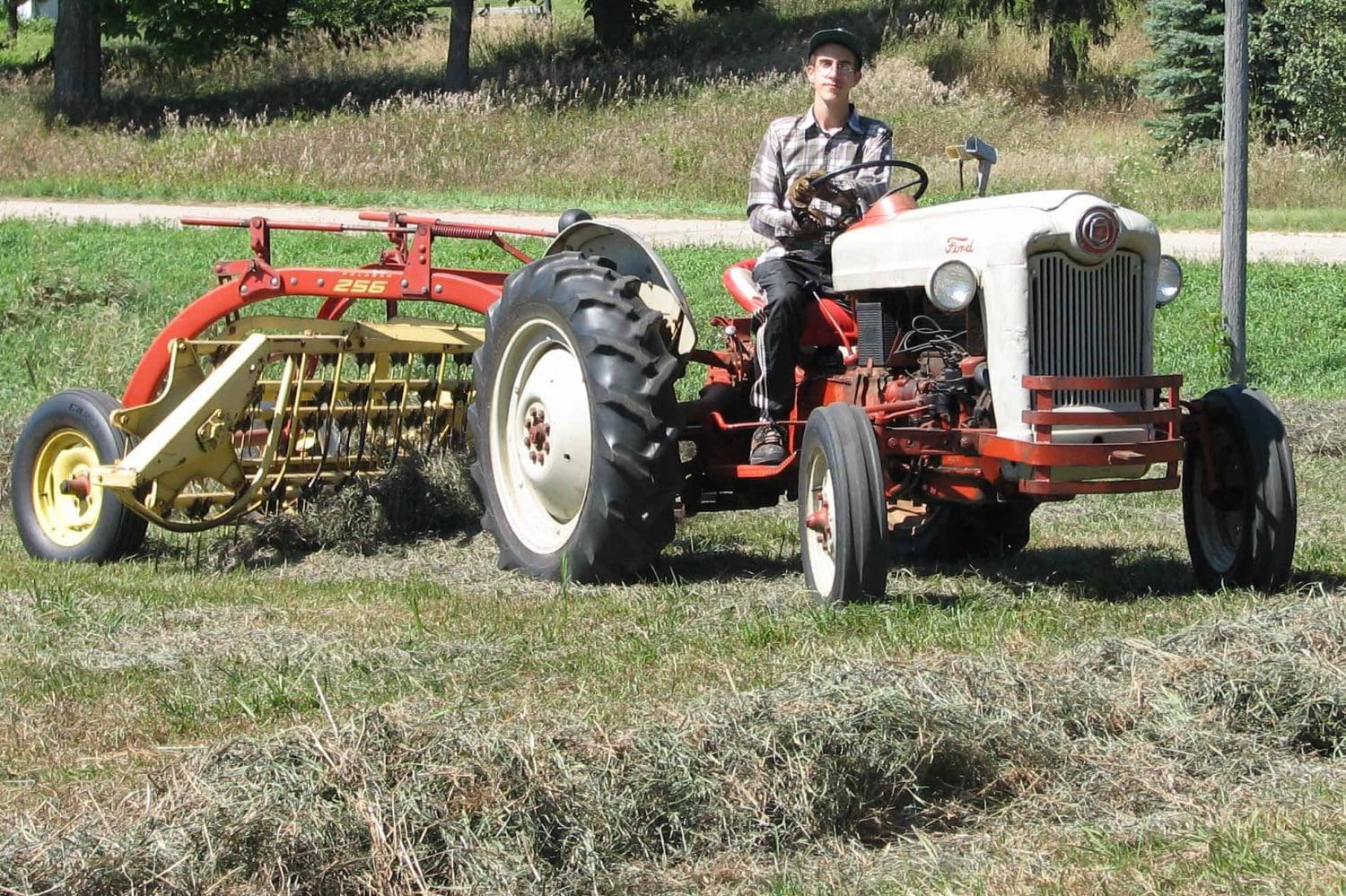
I was curious about the tractor he used, and I did some research. In 1953-54, Ford Motor Company produced a tractor known as the NAA Jubilee which contained a small 25 horsepower engine. It was what I would call a utility vehicle on the farms around Marcellus. Ford later produced a similar model with a larger engine.
The Ford Motor Company NAA Jubilee
Once the ground was turned over a number of things would happen. First on the scene were the robins who were looking for earthworms. They could now be found in abundance and as you have probably witnessed there was often a “tug of war” between the robin and the worm to see if the robin could extract the worm from its home.
As kids in the neighborhood, we would follow the robins and kick clumps of dirt breaking them up into smaller pieces in hopes of find a treasure inside. Often there were old brown bottles and rusty cans which we would remove. But the big hope was we might be lucky enough to find an Indian artifact, primarily arrowheads. While I personally was never fortunate enough to find an arrowhead, we would often find stones that were rounded and smooth which we thought must be a tool of some sort from days gone by.
Before the planting took place, rakes and hand cultivators were used to ready the garden for planting. It should be noted here that most people grew far more produce than their family could ever eat so that made the joy of sharing a key element for small town gardeners.
The next step in the new garden area was for the grownups to get out the wooden stakes, hammer and twine. These were used to create straight lines in the garden as guides for the planting. I recall some would use the package the seeds had come in to place on the stake at the end of the row to indicate what would be popping through the soil in a particular row.
I mentioned arrowheads. There was one place in town where one could always find arrowheads and that was in the glass front cabinet in the living room of Mr. Jensen’s home. You remember him as the outstanding chemistry teacher who was a beacon of learning in his long and storied career at MHS.
One day as a youngster I happened to be at the Jensen home, and I was standing with Mr. Jensen peering into the display case as he explained to me the history and background of the stones found in his cabinet. And then to my surprise and delight he opened the cabinet and took out a small piece of petrified wood and a number of arrowheads. and then he GAVE THEM TO ME. I’m sure it was his way of passing on part of his curiosity and interest to me. I will never forget that moment. I still have the arrowheads and have used them in my teaching.
My sincere thanks to Mr. Jensen. Still teaching after all these years.
Have a great week, Marcellus.
You’re the best.
ROCK ON!

Leave a Reply
You must be logged in to post a comment.